
Image credits: Pexels
While individuals may view artificial intelligence (AI) as a convenient “helper tool,” enterprises have come to view the technology as an execution layer. AI implementation could lead to enhanced efficiency in workflow automation. With this in mind, organizations must ask themselves what happens when AI can do more than suggest next steps, but becomes fully capable of carrying them out.
Why Agentic AI Is Being Implemented
Across industries, teams are consistently overwhelmed by repetitive, manual work. While necessary, these mundane tasks also serve to slow strategic thinking as well as decision-making processes. As AI gains the ability to carry out such tasks on the employee’s behalf, it frees up creative minds for higher-order thinking. The strongest use cases of AI, therefore, are not about replacing people, but removing friction.
Trust, not autonomy, determines whether AI actually gets used
The conversation around AI often centers on capability: what it can do, how fast it works, and how much it can automate. Inside real organizations, that narrative falls apart quickly. Maor Farid, co-founder of Leo AI, makes this explicit when describing how engineers respond to AI systems.
“When ChatGPT came out, my co-founder and I looked at each other and we knew this was the moment. We had this dream of automating all the tedious work that caused us to leave our profession. But when we actually put these systems in the hands of engineers, we saw hesitation. They were concerned. They would say, ‘don’t build this part, let me do it.’ So it is not only a matter of technology. It is a matter of knowing your user and providing something they can use confidently,” Farid says.
That hesitation is not necessarily a resistance to innovation, but a rejection of systems that remove visibility. Leo AI co-founder, Moti Moravia frames the same issue from the system design perspective. He says, “If you deploy agents without clear accountability and human sign-off, you create quiet chaos. Things are happening, decisions are being made, but no one really owns the outcome. That is where organizations get into trouble. It is not about whether the AI works, but about whether the system around it is designed responsibly.”
This is where most enterprise AI strategies break down. They optimize for execution before they establish ownership. Farid, in contrast, describes a model that aligns with how high-performing teams already operate. “The dynamic between the AI agent and the decision maker is like an executive and an assistant. An assistant does not make the decision. It does not run the board meeting. It goes through all your previous material and provides you with the most relevant information. Then you decide. You do not feel it is unexplainable. It is the opposite of a black box. It is an open box that you can understand.”
Moravia pushes that idea further, emphasizing that explainability is a requirement. “The moment the system becomes a black box, you lose the user. Especially in industries where decisions carry risk. People need to understand why something is happening, not just that it is happening. Otherwise, they will override it, ignore it, or refuse to use it entirely.”
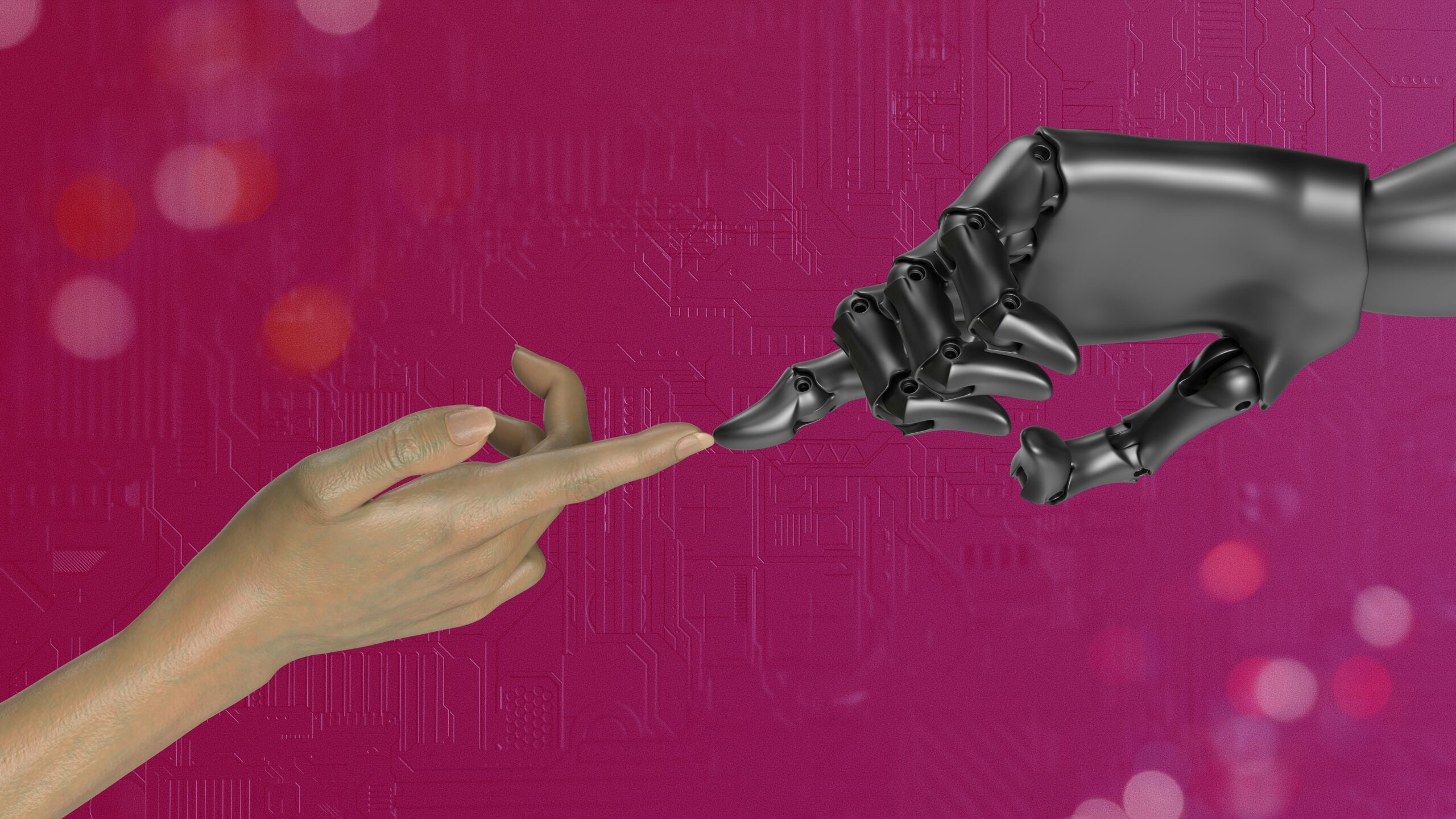
Taken together, their perspective reframes the conversation. The goal is not to build AI that replaces human decision-making, but to build systems where decision-making becomes clearer, faster, and more informed. That distinction determines whether AI becomes embedded in the workflow or quietly abandoned.
The companies that succeed here will not be the ones that push autonomy the furthest, but the ones that design for trust first, and let capability follow.
Productivity is being redefined at the system level
Enterprise leaders often talk about productivity as an individual trait, but the reality is more structural. Most systems are designed in ways that waste human capability. Spotlight.ai CEO Roi Carmel has spent years watching this play out across organizations.
“In all those companies, I saw the same problem happening over and over again. Sellers are very good at building trust, navigating relationships, understanding politics. But the analytical side, the execution, the systems, that is not their strength for most of them. Yet we keep pushing them to do it. They end up spending 70% of their time on tasks they are not good at, and only 30% on what they are actually great at.”
Agentic AI improves that imbalance and also exposes how flawed the original system was.
“What we are building toward is an autonomous enterprise sales team. That does not mean no people. It means people move from being executors to orchestrators. Instead of doing every task step by step, you have agents working for you, and you orchestrate them. That allows you to scale yourself and spend 70% to 80% of your time on what you are actually good at,” Carmel explains.
This is where most companies misstep. They treat AI as a feature instead of a structural redesign. Carmel is direct about the consequences. “95% of AI projects fail in enterprises. That is because of unrealistic expectations. Either they expect AI to do everything perfectly, or they isolate it to a single task without redesigning the workflow. In both cases, they miss the opportunity to create a collaborative system between humans and AI.”
The shift here is about redefining what productive work looks like in the first place.
The human layer becomes more important, not less
As AI becomes more capable, there is a natural instinct to push it closer to the customer. That instinct is often wrong, and Every Task founder, Claudia Lowry, sees this tension clearly in service-based businesses.
“What many business owners are finding right now is that the front office team is so busy answering calls and qualifying calls that they do not have time to do the work that only humans can do. So one of the biggest AI services we offer is virtual receptionists. It acts like a human, it can set goals, achieve goals, and direct callers. And at first people are hesitant. But when they try it and see how intelligent it is, it becomes a no-brainer because it saves so much time,” Lowry explains.
AI thrives in structured environments. It breaks down into emotional ones. Lowry illustrates, “The repetitive tasks, the copy paste processes, those should be automated. But when it is personalized, when you need to ask specific questions or understand context, that has to stay human. AI cannot make emotional decisions. It can only follow a process.”
This is where many implementations quietly fail. Not because the technology does not work, but because it is placed in the wrong part of the workflow.
Lowry also highlights something more subtle. Oversight is not optional. “Most businesses do not let the AI run completely on its own. There are human checkpoints along the way. There is still accountability for both the human team and the AI. People want to feel in control of what is happening in their business.”
And ultimately, the market reinforces that boundary. “People want to deal with people. People will buy from people that they know, like, and trust. If they feel like it is just AI doing all the work, it can actually have the opposite effect.”
The companies that win here are not necessarily the ones that automate everything, but the ones that know exactly where to stop.
Execution is replacing insight as the core product
For years, software has been built around insight. Think dashboards, analytics, and recommendations. The assumption was that better information leads to better decisions.
Search Atlas CEO & CTO Manick Bhan points out where that model breaks. “There are a lot of tools that provide a ton of data. But it is the what’s next where people draw a blank. You get all this information, but you still have to figure out what to do with it. That is where most marketers struggle.”
Agentic AI closes that gap by moving from suggestion to action. Bhan illustrates, “Instead of telling you what to do, it actually implements it. If you have written a blog and it gives you suggestions, you do not then have to go and upload it and edit it. The system does all of that for you. It is not just a tool that gives advice. It helps you execute.”
This fundamentally changes the role of the user. “You are never going to automate the person completely. There are certain things you cannot replace. You still need someone who understands the customer, who can find problems, who can make decisions. But everything that is repetitive, cumbersome, and time consuming, that is what the AI should take care of.”
The shift is not toward automation for its own sake, but toward freeing up cognitive bandwidth. Bhan is also clear about where the industry is heading. “Users do not care about clicking through a bunch of tools anymore. They want to write their problem and have it solved. Any software that does not provide that kind of agentic execution will become obsolete very quickly.”
The implication is straightforward. Insight is no longer enough. Execution is the product.
AI and a Shift in Leadership
The ability to complete manual tasks is still valuable, but the ability to delegate those tasks effectively to an AI agent is transformative. While operations should remain aware of where human judgment is still essential, AI has real potential in the execution layer of one’s workflow. The best leaders may be those who encourage the use of AI technology, without compromising on accountability for its use.