
Early in their careers, most professionals believe the advice they hear most often. Work hard, be patient, and someone will eventually notice.
It sounds logical. It is also, according to Stephen Childs, one of the most expensive beliefs a professional can hold.
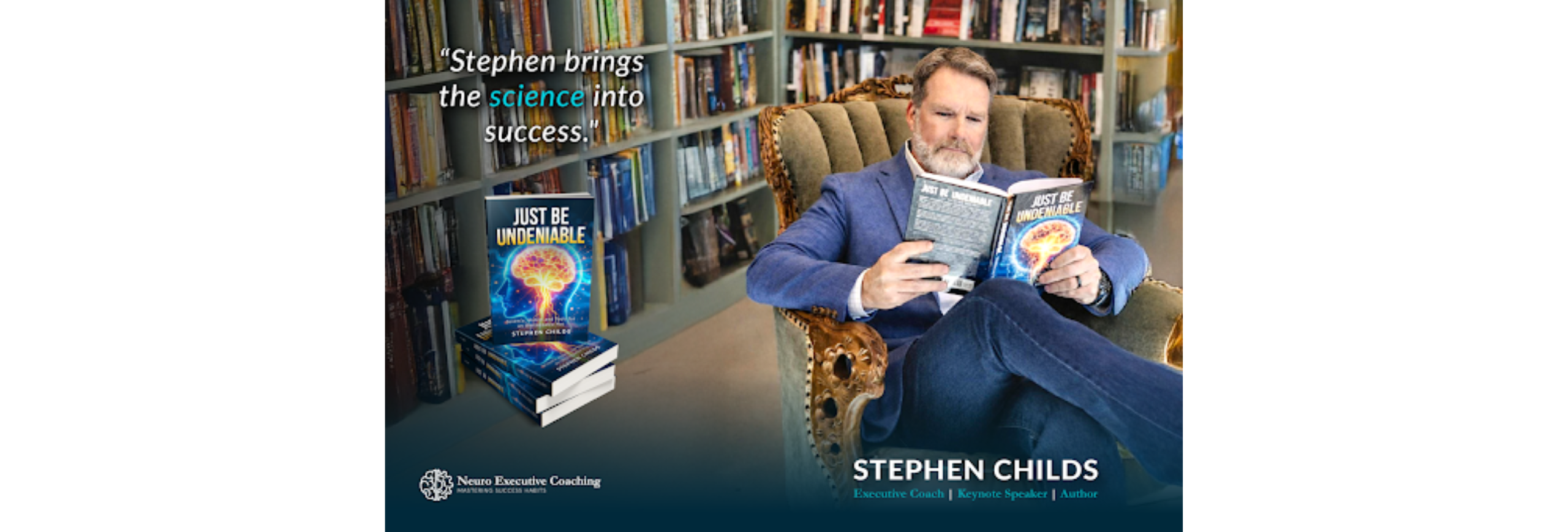
As an executive coach, leadership strategist, keynote speaker, and author of the forthcoming book Just Be Undeniable, Childs has spent two decades working with executives, entrepreneurs, and high performers across industries. And in that time, he has observed a consistent pattern that separates the professionals who move fastest in their careers from the ones who stay stuck waiting for their moment.
“The people who advance the fastest are not waiting to be noticed,” Childs says. “They are becoming impossible to ignore. That distinction changes everything.”
Most career advice focuses on positioning, how to network better, build a personal brand, and say the right things in the right rooms. Childs does not dismiss those things. But he argues they are secondary to a far more powerful principle.
“Undeniable performance is what drives everything else,” he explains. “When someone’s work consistently produces results, when their preparation is obvious, and their discipline shows up every single day, people notice. Not because they asked them to. Because they cannot help but notice.”
Being undeniable, in Childs’ framework, is not about self-promotion. It is about building the habits, mindset, and systems that make a person’s contribution visible and valuable. And it starts, he argues, in a place most professionals overlook entirely.
Get Your Head in the Game
More than a century ago, the writer James Allen published a short book called As a Man Thinketh. In it, he made a simple but powerful argument: thoughts shape character, circumstances, and ultimately destiny. In other words, the life a person experiences often reflects the thinking they rehearse.
Childs has built much of his coaching philosophy around this idea, grounded in what modern neuroscience has since confirmed.
“The brain is constantly interpreting reality through patterns of thought practiced over time,” Childs explains. “Those patterns influence what a person notices, how they interpret events, and how they respond to opportunity or pressure.”
When internal dialogue is disciplined, constructive, and focused on growth, behavior follows that direction. Preparation becomes more deliberate. Responses to setbacks become calmer. Possibilities appear that others overlook. But when thinking is chaotic, negative, or dominated by doubt, the opposite happens. A person hesitates. They overanalyze. They quietly withdraw from the very opportunities that could have stretched their potential.
“Thinking becomes the blueprint for behavior,” Childs says. “And behavior compounds into results.”
High performers understand this deeply, whether they use Allen’s language or not. Before an Olympic athlete steps into competition or a fighter pilot takes off on a mission, there is a mental preparation process happening behind the scenes. They rehearse the performance in their minds. They anticipate challenges and train their thinking before they ever execute their actions.
Most professionals, Childs observes, skip this step entirely.
“They focus on strategy, tactics, and credentials while neglecting the one factor that influences them all,” he says. “The quality of their thinking.”
Childs points to a specific neurological mechanism that makes this so consequential. The brain constantly filters information through a system called the Reticular Activating System. Its job is to determine what deserves attention and what gets ignored. When an internal narrative says, “I am not ready for that opportunity,” the brain highlights evidence that reinforces hesitation. When the story says “I struggle under pressure,” the mind quietly dismisses every success that contradicts that belief.
“James Allen understood something many people still overlook,” Childs notes. “Change begins in thought long before it appears in action. The first step toward becoming undeniable is not a new strategy or a new opportunity. It is learning to discipline the thinking that shapes both.”
Stop Relying on Motivation
One of the most consistent observations Childs makes across the executives and high performers he coaches is that motivation is a deeply unreliable foundation for career growth.
“Motivation comes and goes,” he says plainly. “Some days, a person feels energized and focused. Other days they do not. If a career depends on motivation, progress will always be inconsistent.”
The solution, in Childs’ view, is habits. Specifically, what he calls micro-habits, small repeatable actions that require very little motivation to start but create meaningful change over time.
Five minutes of preparation before a meeting. Ten minutes reviewing an industry trend. A short daily reflection on what worked and what needs to improve. Individually, these actions seem insignificant. But over time, the behavior becomes automatic. And automatic behaviors compound.
“Most people dramatically underestimate what disciplined repetition can produce,” Childs says. “The difference between average performers and exceptional ones is rarely dramatic bursts of effort. It is small behaviors repeated long enough to reshape identity.”
Say Yes Before You Feel Ready
Another pattern Childs observes consistently among the highest performers he works with is what he calls the Strategic Yes.
“Many opportunities arrive before you feel fully prepared for them,” he explains to his clients. “The safe response is hesitation. The growth response is yes.”
Strategic Yes, in Childs’ framework, does not mean accepting every request that comes your way. It means saying yes to the opportunities that expand your skills, increase your visibility, and force genuine growth.
“Every time you say yes to something uncomfortable, you increase what I call your surface area for luck,” he says. “More experiences. More relationships. More chances for people to see what you are truly capable of. Over time, those opportunities compound into a career most people only dream about.”
Do the Work Most People Avoid
At some point in every career, Childs argues, the difference between people becomes very simple.
“Some people talk about potential,” he says. “Others do the work.”
The work, in his experience, is rarely glamorous. It is the preparation before the meeting. The extra research before the presentation. The disciplined practice that happens when no one is watching and no one is keeping score. High performers, Childs observes, do not just work harder. They work more deliberately. They build routines that reinforce excellence. They document their goals, measure their progress, and reflect honestly on what is working and what needs to change.
“They treat their career like a craft,” he says. “And that level of intentional effort produces something that is very difficult to ignore. Credibility.”
Stop Waiting to Be Chosen
The through line of everything Childs teaches, and the central argument of Just Be Undeniable, is a simple but powerful reframe of how most professionals think about opportunity.
“Many professionals spend years hoping someone will recognize their potential,” he says. “But opportunities rarely create undeniable people. Undeniable people create opportunities.”
When preparation is consistent, habits are disciplined, and the mindset is aligned with growth rather than hesitation, something remarkable begins to happen. The work starts speaking for itself. A person stops asking for opportunities and starts finding them.
“Success rarely comes from waiting to be chosen,” Childs says. “It comes from building the habits, the mindset, and the discipline that make performance impossible to ignore. The goal is not to hope someone eventually recognizes your potential. The goal is to become undeniable.”
Stephen A. Childs is an executive coach, leadership strategist, CHRO, and the author of Just Be Undeniable, available now. Connect with Stephen on LinkedIn or visit StephenChilds.com to learn more about his coaching programs, masterclasses, and the Undeniable community.
Written in partnership with Tom White