
Image credit: Pexels
SMBs are moving beyond quick fixes, using disciplined AI strategies, human oversight, and agile execution to outperform larger rivals.
Small businesses have stopped using artificial intelligence as a quick solution. A growing number of businesses now implement AI through their established systems, creating competitive advantages when used responsibly. The shift marks a turning point where success with AI is no longer about using it everywhere, but about using it correctly.
Across industries, smaller firms are proving that intentional deployment, not broad adoption, is what separates meaningful gains from wasted effort.
AI Is Powerful, But Only When Used in the Right Place
Early enthusiasm around AI led many small and mid-sized businesses (SMBs) to deploy it widely, often without clear direction. The result was more noise instead of value.
Companies like MasTec learned this the hard way. After initial implementations failed to deliver, the firm refined its approach, narrowing AI’s role to specific, high-impact use cases.
Siddharda Vangala, Senior AI Engineer at MasTec, summed up the lesson succinctly: “You need to include AI where it acts smarter… It should not be the one who’s taking everything.”
This shows how AI delivers results only when placed strategically within workflows. Using it indiscriminately only adds to complexity, but using it deliberately generates value.
The Rise of AI as a “Co-Pilot,” Not Autopilot
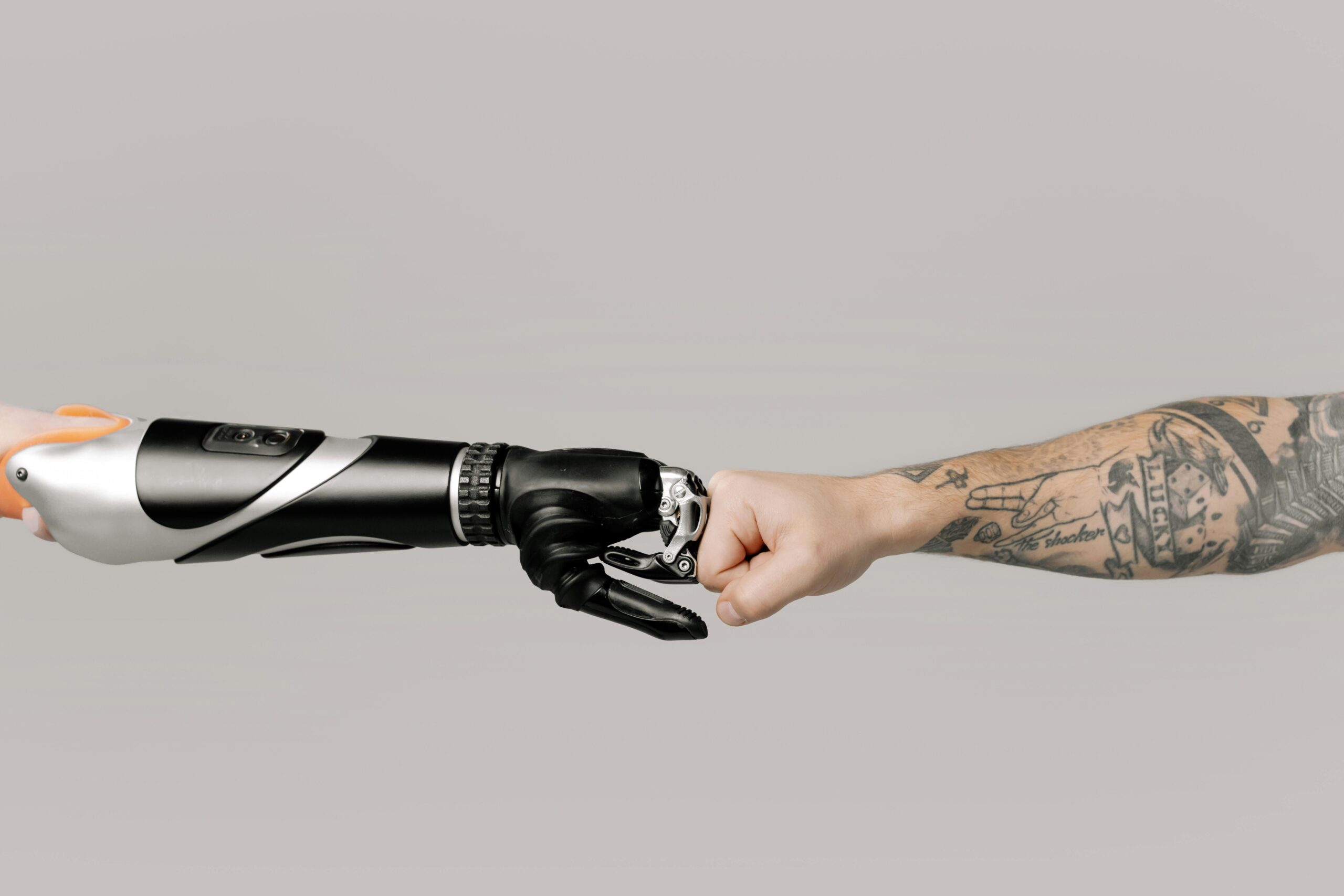
The shift in thinking has led to a new operating model in which AI acts as a co-pilot rather than a fully automated system.
For firms like The Deady Group, this means treating AI less like a finished product and more like a developing team member. Systems are built gradually, refined through constant feedback and iteration.
Founder Will Deady describes the process in human terms: “I think of almost like, if you had a junior associate… it’s more of an iterative process.”
This approach emphasizes collaboration. High-quality output does not come from a single prompt but from continuous modifications in inputs.
Jagadish Umesh, Founder of ZenFlip, believes that AI is a beneficial tool for growing your reach. While human experience is needed to understand your target audience, AI can help you better reach and understand your customer base.
“See, there are a couple of things that you need to do. The first thing, and the most important thing, is to know the market,” says Umesh.
“It’s just the business knowledge and knowing what it is and knowing the market is what is going to help. Once you know that, then you can feed that information to AI. It will help with further research,” continues Umesh.
Trust, Accuracy, and the Human-in-the-Loop Model
As adoption increases, AI is emerging as reliable only with the systems that support it. Hallucinations and inaccuracies remain a persistent risk, especially in high-stakes applications.
To counter this, businesses are investing in validation frameworks. At MasTec, “trust and verify” systems ensure outputs are checked against source data, reinforcing both accuracy and accountability.
This human-in-the-loop model is fast becoming a standard practice. Transparency regarding the source of information and the way it is processed has become essential.
Speed Without Strategy Is a Trap
AI’s ability to accelerate work is undeniable, but this speed does not guarantee better outcomes. In fact, early implementations in areas such as ticketing systems and content generation often produced faster outputs that were unusable. Without structured workflows, businesses will end up spending more time correcting errors than they saved through automation.
For AI implementation, faster does not mean better unless it is aligned with a pre-defined process. Discipline, when combined with technology, allows AI to scale effectively.
Kaspar Fopp, CEO of Wonder, emphasizes starting with one workflow at a time, rather than rushing a large-scale project. He believes in automating a single, manual task end-to-end in order to achieve immediate, measurable value.
“In many cases, you can’t bolt it on. In many cases, you have to rebuild from scratch, and you have to say, okay, this is now AI-based,” says Fopp.
Leadership and Culture in the AI Era
Beyond systems and workflows, AI adoption is also changing workplace culture.
At Workhuman, leadership has taken a human-centered approach, emphasizing the role of trust and intent in AI-driven environments.
KeyAnna Schmiedl, Chief Human Experience Officer, highlights the importance of alignment: “Kindness has that idea of matching intent and impact.”
This perspective reflects how successful AI integration depends not just on technical capability but on psychological safety. This will preserve teams’ confidence to experiment, question outputs, and refine systems.
The Small Business Advantage: Speed and Agility
If there is one area where SMBs hold a clear edge, it is agility. Without the burden of legacy infrastructure, smaller firms can adopt and adapt AI tools far more quickly than large enterprises.
The Deady Group, for example, has leveraged this flexibility to iterate rapidly, refining systems in real time and responding directly to feedback. In contrast, larger organizations often face delays due to data complexity and slower implementation cycles.
Final Thoughts
The future of business doesn’t rely solely on automation; rather, it relies on its augmentation with disciplined strategies. Small businesses that treat AI as a collaborator, apply it with precision, and maintain strong human oversight are positioning themselves ahead of the curve. In the end, the advantage does not come from AI itself. It comes from how intelligently it is used.