
Image credit: Pexels
From personalized salon interactions to AI-assisted business development, companies across industries are using artificial intelligence to improve service while keeping human oversight at the center.
Artificial intelligence has moved from a back-office experiment to a customer-facing advantage. Businesses across industries are using AI not simply to reduce costs, but to create faster, more personalized, and more consistent customer experiences. From improving access to customer data to automating administrative tasks and accelerating product development, businesses are finding practical ways to integrate AI into everyday operations.
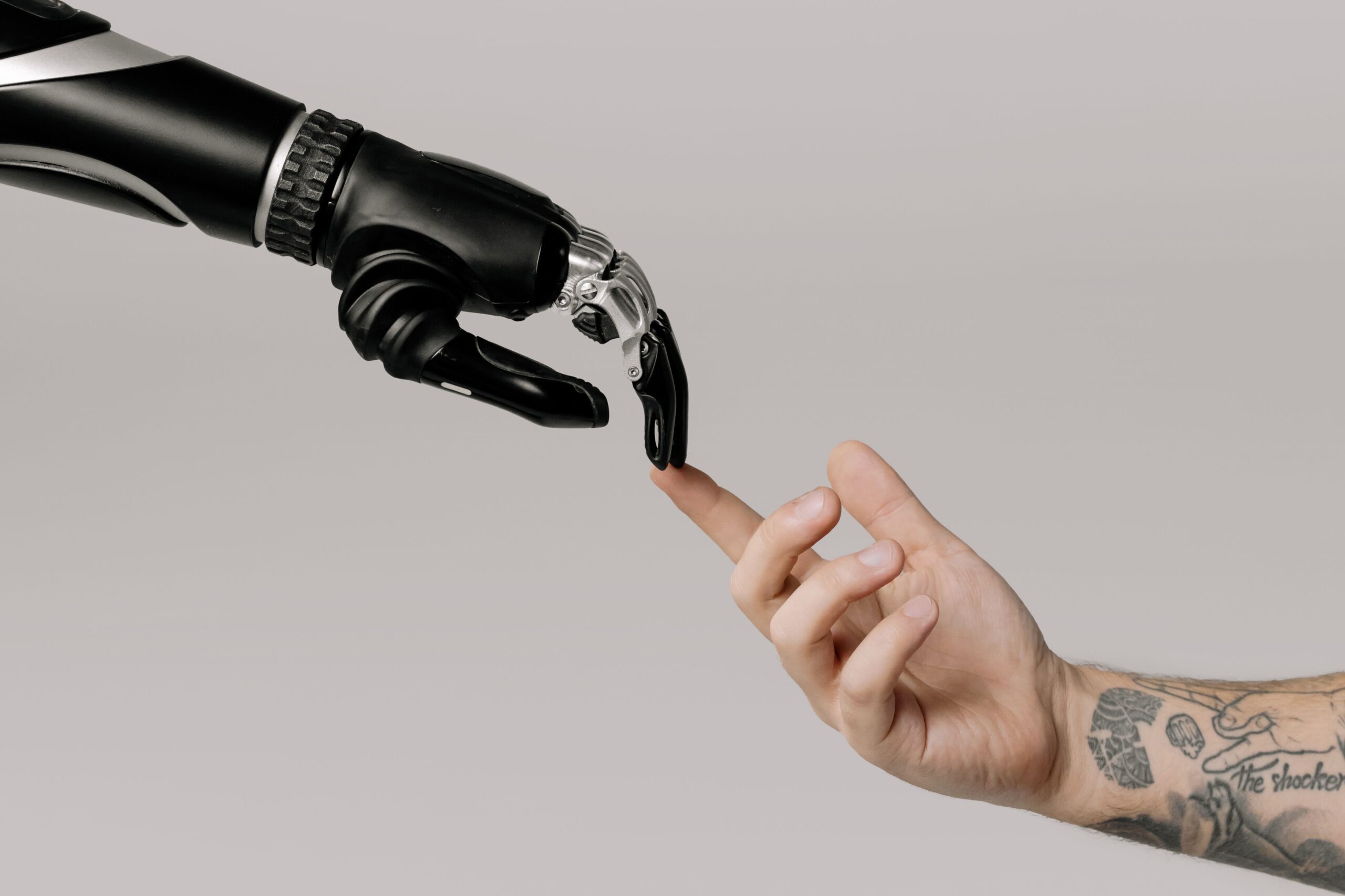
Many business leaders are emphasizing that AI works best when paired with human oversight. Rather than replacing employees, the technology should be used to support teams with better information, improved workflows, and faster decision-making.
AI Improves Customer Context and Response Quality
Customer experience often breaks down when employees lack quick access to client history, preferences, or previous interactions. Businesses are now using AI-powered systems to close these gaps and improve customer engagement.
One example is Hottie Hair, which developed a custom CRM system that combines appointment history, phone logs, Square APIs, and transcribed calls into a single platform. The system allows staff members to generate more informed and personalized responses during customer interactions.
Michael Frehner said, “Data is the foundation for personalization.” Frehner believes that businesses should avoid treating AI as a shortcut for broken systems. “AI amplifies existing workflows; applying it to weak processes will only make them ‘fail faster.’”
Frehner also emphasized that the technology is most effective when it enhances employees’ capabilities rather than replacing them.
“AI ‘raises the ceiling’ by amplifying staff capability, not just speeding up poor processes.”
AI Speeds Up Research and Opportunity Discovery
Beyond customer service, AI is also changing how businesses identify opportunities and conduct research. Companies are relying on AI-assisted screening tools to process information faster and surface high-potential leads in real time.
Verb Ventures is among the companies using AI to automate startup sourcing and improve business development workflows. AI-generated screening helps teams evaluate opportunities more efficiently, reducing the time spent on manual research.
However, executives caution that human review remains critical, particularly as generative AI systems can produce inaccurate or incomplete outputs.
Alex Chikunov described the technology as a collaborative tool rather than an independent decision-maker.
“AI is a tool that requires continuous teaching, not a standalone, autonomous agent.”
He also stressed the importance of transparency and realistic expectations in AI-generated outputs.
“If you cannot find the requested number, state that it is not possible.” Looking ahead, Chikunov believes “the true ‘game changer’ will be Gen AI.”
Rethinking Customer-Facing Administration With AI
For many businesses, the customer experience depends heavily on repetitive operational tasks such as scheduling appointments, responding to messages, handling front-desk inquiries, and managing updates. AI is automating these workflows while maintaining service consistency.
Twizzlo is one company building toward what it describes as an “AI receptionist” for salons and spas. The goal is to streamline customer-facing administration while allowing human staff to focus on higher-value interactions.
Roger Grekos said, “The optimal workflow alternates between AI generation and human validation.” He warned that automation alone is not enough to maintain quality customer engagement. “AI is a powerful tool, but human experts are essential to validate its output.”
Grekos also noted the value of authenticity in customer communication.
“AI-generated social media posts lack authenticity and fail to engage audiences.”
Faster Product Development Still Requires Customer Focus
AI is helping small teams accelerate product development. Companies are using AI tools to organize workflows, generate ideas, and build minimum viable products faster than traditional development cycles would allow.
On Deck Society is using AI agents to coordinate product development and internal operations.
Pacifico Soldati described the approach as “AI as a C-suite team.”
The company’s product strategy, however, remains focused on solving a clear customer problem. Its platform includes visibility filters designed to give users greater control over their online interactions. “Users control who can see them,” eliminating the “needle in a haystack” search.
Soldati also encouraged businesses to adopt AI incrementally rather than attempting large-scale automation all at once.
“Start with one AI advisor for a specific blind spot.”
Better Customer Experience Starts With Better Systems
Across salons, investment firms, software platforms, and service businesses, companies are finding success by starting with specific problems. They are improving one workflow, reducing one customer frustration, or automating one repetitive task.
The technology is proving most valuable when it supports employees with better context, faster responses, and more reliable systems. Human oversight remains essential to prevent errors, preserve authenticity, and ensure customer relationships do not feel generic.
As businesses face rising customer expectations, AI is increasingly becoming a competitive advantage for companies that use it intentionally. The goal is not to replace the human side of customer experience, but to remove friction so employees can serve customers more effectively.