Image credit: Pexels
From automating routine tasks to sharpening decisions, companies are using AI to redirect human time toward higher-value work.
Artificial intelligence is moving beyond experimentation and into everyday business operations, where companies are using it to automate repetitive workloads, process large volumes of information, and give employees more time for strategic responsibilities. The emerging advantage isn’t simply doing the same work faster, but enabling relatively lean teams to produce substantially more.
From Administrative Work to Strategic Work
Repetitive administrative tasks can consume employee time that could otherwise go toward culture-building, talent development, decision-making, and other higher-value responsibilities. At Peoplebox, AI automates areas such as resume screening while supporting end-to-end talent management through a “human-like AI” platform.
“So everybody’s using AI. The resumes today are built by AI,” Abhinav Chugh of Peoplebox said.
The company sees the next step as AI taking on human interactions that are often delayed because employees lack the bandwidth to handle them.
“What I believe that the future is when AI starts doing these human interactions, which are often either delayed or dropped,” Chugh added.
Yet Peoplebox’s approach keeps people involved in the process.
“So that human in the loop is very, very important. You can’t just go and build a team of bloggers or AISDRs or customer support without a human, because then you will, there will be no difference.”
This approach also points to lean scaling. A 28-engineer team at a company generating over $50 million in annual recurring revenue, for example, can produce work comparable to that of more than 100 engineers by amplifying team output through AI.
Measuring AI by Revenue
At Plutus21 Capital, AI’s value is measured more directly: by revenue. The firm uses its proprietary Plutus21 Edge tool to filter a universe of 5,000 companies down to about 200 for human analysis, allowing a small team to handle a much larger pool of information.
“The key element is the context in which the AI tool is being implemented,” Arsala Khan of Plutus21 Capital said.
For Khan, however, greater adoption depends on trust.
“What I’m excited about is ever-growing trust in AI. For me, fundamentally, how you think about trust: can you trust the AI technology? I was going to show you how it began, and you were very skeptical of it, that perhaps it’s not as trustworthy, it’s not as correct, it’s not as rigorous as it should be, so we have to do our own implementation; we have to do our own checks.”
She added: “We still do our own checks, but I am excited about ever-growing trust in the AI technology. I don’t have to double-check, essentially, what the output is; I can just directly implement it. And I think we are going towards that. I think I have seen in my workflow that I have started to trust AI more and more.”
AI Moves Into Hiring, Sales and Marketing
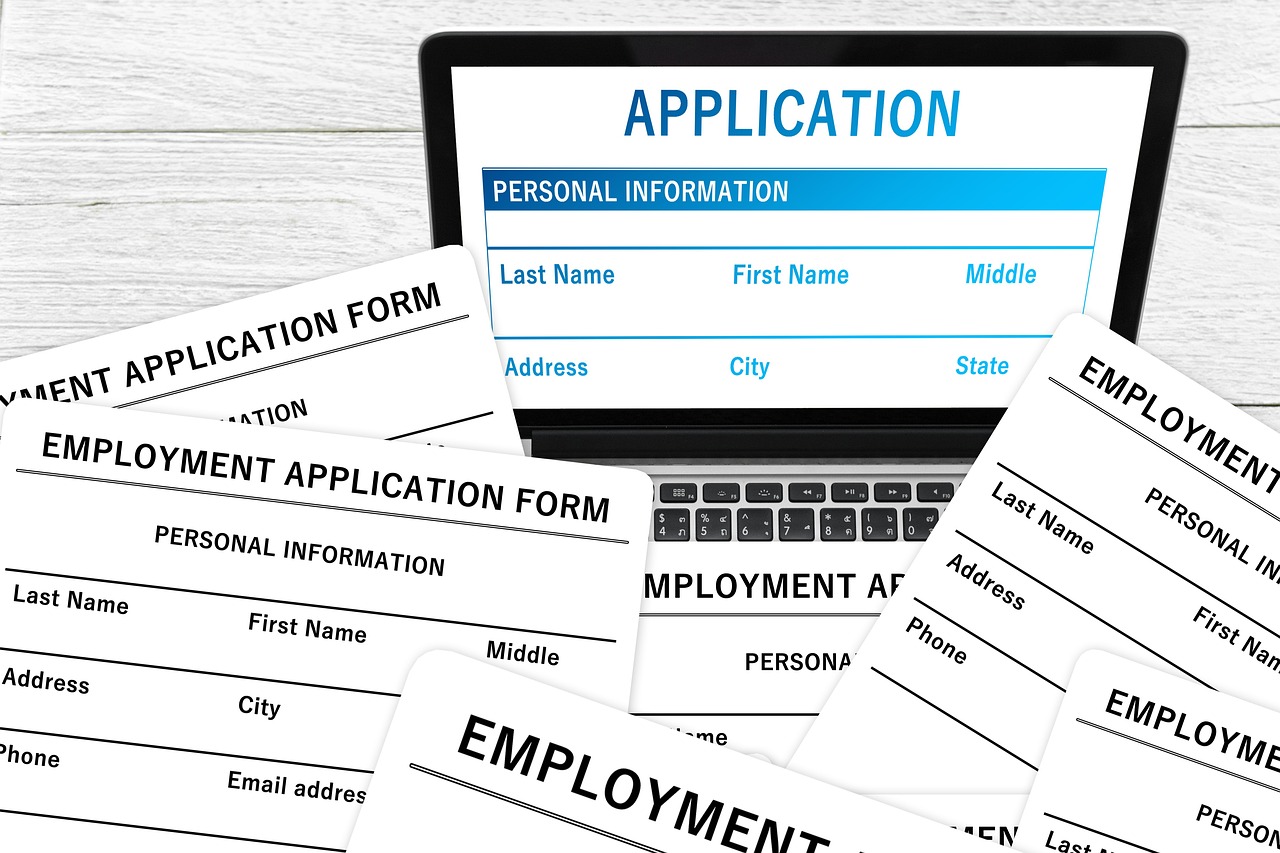
AI is also changing hiring and performance management, from resume screening and candidate conversations to first-round interviews. Traditional annual or semi-annual performance reviews can consume four to six weeks, creating another opening for automation and continuous management.
At ACE Pool Repair & Remodel, AI-powered renderings help customers visualize a remodel on their actual pool, addressing hesitation without the cost of professional renderings. The company has also brought marketing in-house, using AI for an SEO-optimized website, Google Ads, and content.
Alec Davis of CE Pool Repair & Remodel highlighted: “The biggest thing is going to be in keyword research. How AI can kind of scrape Google in a way and say, if people are looking for pool and blank, they’re usually searching these terms.”
The strategy is designed to establish the company as a local authority in AI-driven search.
“What we want is Google and AI to see us as the local authority, and it’s telling us what to say by asking it the right questions.”
Davis is also building a custom tool to automate SEO, content generation, and competitor analysis.
“With the power of AI, I’m actively building something that I hope will be done in the next few weeks, with me putting an hour here, an hour there, and seeing how that comes out.”
Scaling Without Replacing People
SympathiQ uses AI differently. The company verifies wellness specialists through diplomas, certificates, and identification, then uses an AI-supported backend engine to match users with the top three specialists. The system reduces manual screening by over 70 percent while leaving user-facing interactions human-powered.
“So this is where I came up with SympathyiQ.com, where we allow all types of well-being specialists, whether it’s mental health, physical health, dietitians, nutrition, fitness coaching, or career path, to join our platform, where we go through verification procedures, making sure that those experts have diplomas and have accomplished their certificates.”
Irina Duisimbekova said the platform addresses the difficulty of identifying genuine specialists.
“People are calling themselves experts, but they are not. Obviously, within all these big industries, there are a lot of choices, and the customer faces this problem because even if you go to a platform like ours, to choose the right specialist, what we did is we are developing an engine, an AI-supported engine, that helps them to match the exact requirements they have.”
She added: “What makes me excited is that AI actually can do a lot of things in our within our platform and help people to, you know, especially on this side of special.”
More Time for Human Judgment
Nearshore Business Solutions is using AI to automate candidate profiles and contract drafts while keeping recruiters responsible for decisions. Automating candidate profiles can save recruiters 10–12 hours a week, time that can instead support 10–20 additional interviews.
Eric Tabone described the workflow: “So if a recruiter is doing 30, 40 interviews a week, let’s say we present half of them, I suddenly, they’re spending 10 to 12 hours a week on admin on building that profile, and so the way we set up, we set up automations that use AI that obviously pulls fireflies, we pull the resumes, and it sticks across their job description, and so when a recruiter gets off the interview, we trigger it, pulls the interview notes, aligns with their profile, and we set up the profile that we submitted to the client.”
AI also helps with technical vetting, but Tabone stresses the limits of automation. “Recruiters often know about tech and can talk through it, but you cannot expect a recruiter to sit down and actually run a technical, high-end technical interview.”
Tabone added: “I think AI makes mistakes, and anybody who says it doesn’t, they’re wrong. So I also think AI, especially when you’re interviewing, you don’t want to leave the decision of AI to make a decision on whether you pass a candidate for a number of reasons.”
Final Thoughts
The next stage of workplace AI may therefore be less about replacing people and more about redistributing their time. As systems take on repetitive administration and increasingly support delayed human interactions, the competitive advantage may come from how effectively companies reserve human effort for judgment, relationships and strategic thinking.