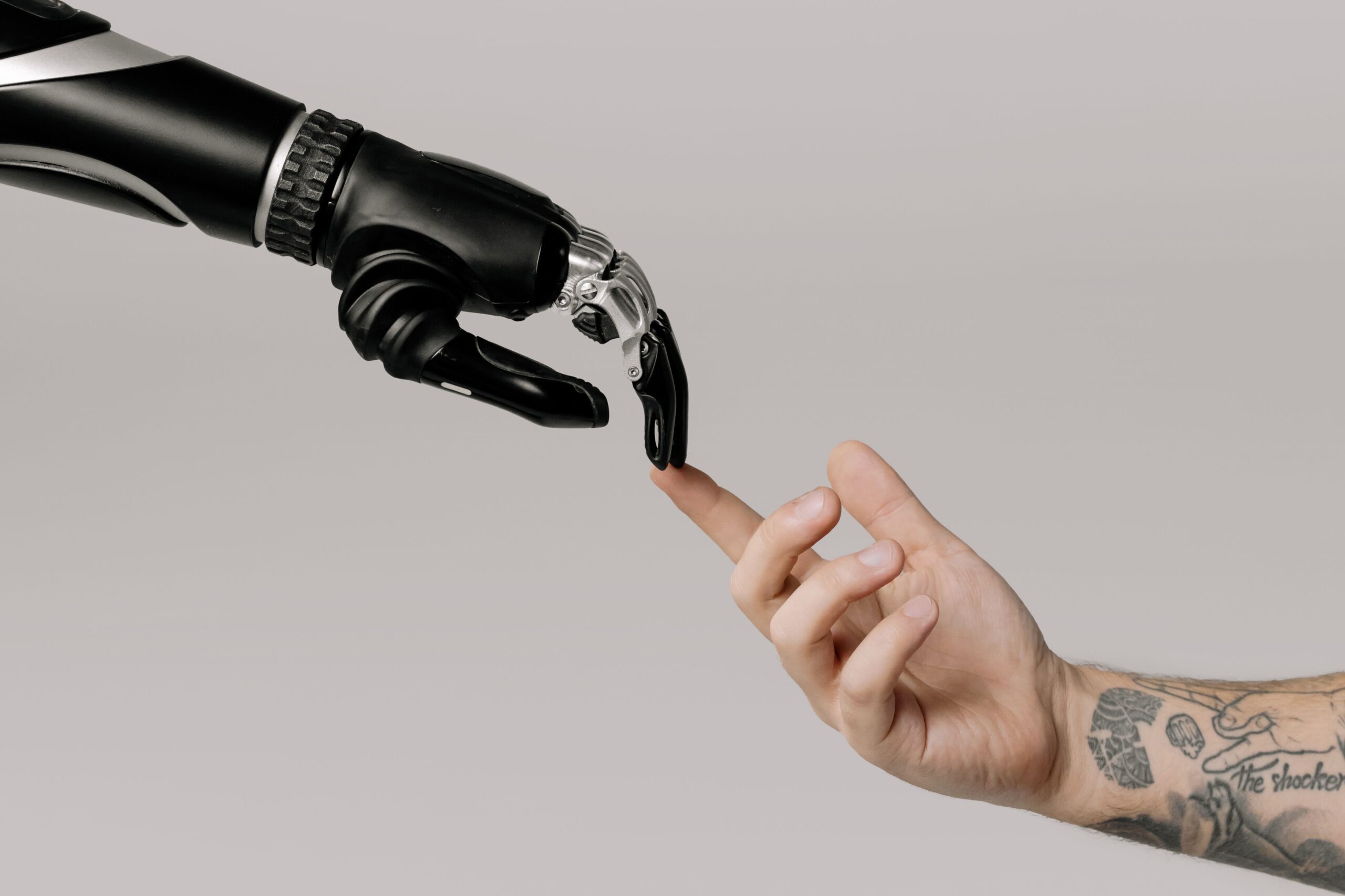
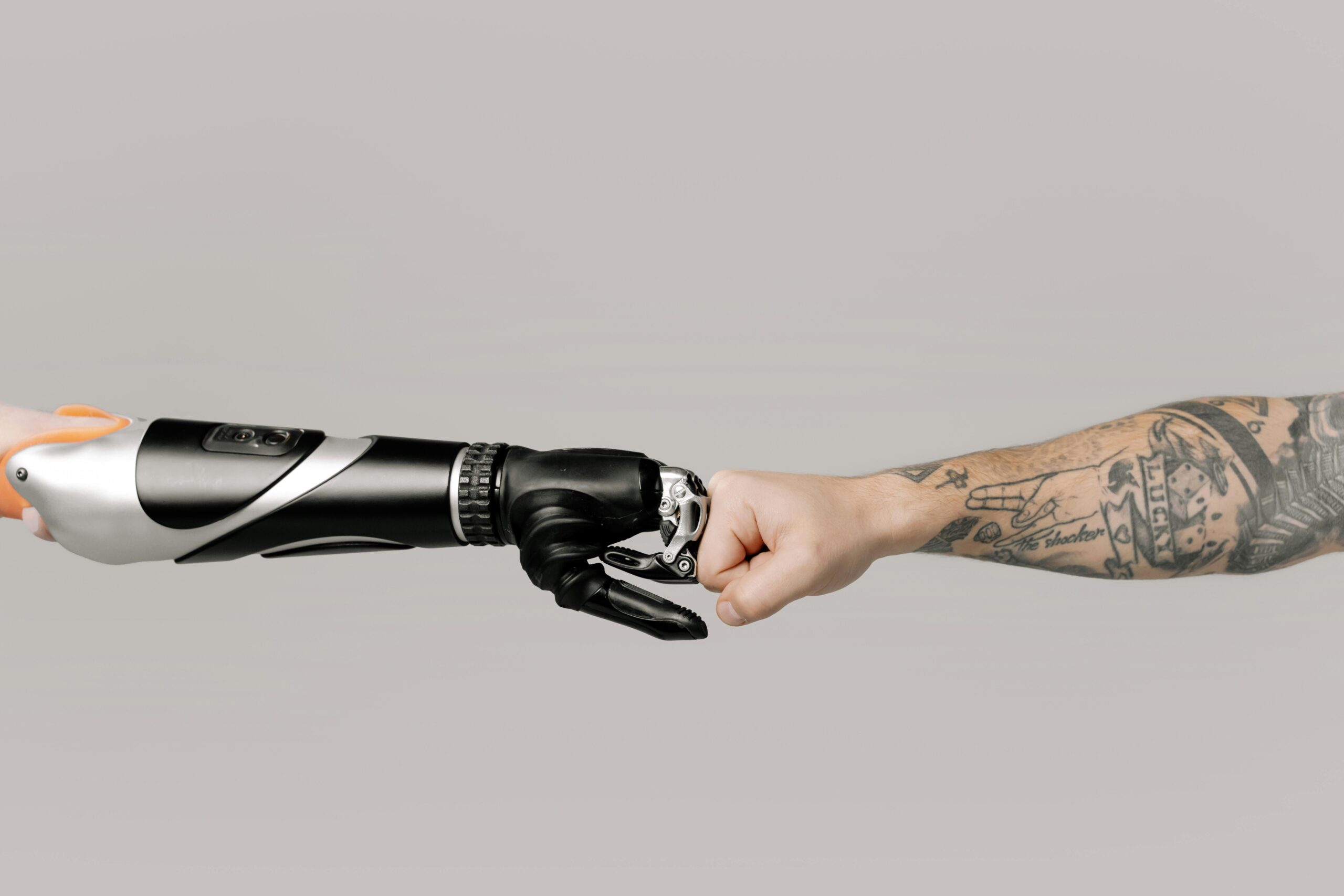
Companies across all industries are discovering that AI works best for their organization when it is used as a tool to enhance human expertise.
Businesses are under increasing pressure to control costs and produce more. Many companies are adopting artificial intelligence to reduce repetitive work and streamline processes so they don’t have to increase team size. This shift is affecting how workers spend their time at work.
AI automation is often seen as the answer to growing demands on companies. Still, many are finding that while AI can free workers from time-consuming or repetitive tasks, the best way to make meaningful gains is to keep people at the center of the process. Employees with expertise should have the final say in judgment, quality, and business-related relationships.
Using AI as a tool can save time and money if companies redesign their workflows centered around their human workers. Several industries use AI as a useful tool, including music production, education, and professional services.
AI Works Best When Handling Repetitive Work
As AI-generated music has increased on streaming platforms, human judgment and creativity remain vital to music production. Carlos Micames is the founder of Musikai, an AI-powered production studio that primarily works on video and commercial content. He understands how creative ownership matters. Though generative AI can create music quickly, purely AI-generated music raises serious issues.
“Suno and Udio were involved in a huge copyright infringement lawsuit. The U.S. Copyright Office stated that pure AI-generated music is not copyrightable. If you’re an agency using pure AI music and that track becomes a hit, you’d have no claim to ownership. A competitor could just come and take it. I saw that we needed to move toward governance where AI is used as a tool to help producers rather than replace them,” Micames says.
Musikai uses AI as a tool, placing their human client in charge of how it is utilized. Within a 24- to 48-hour span, Musikai produces tracks for the client and collaborates with them on essential creative elements. AI helps remove the repetition in track-building.
“The cultural elements, like the specific instruments for a specific regional identity, are all still human. The timing is also something human producers handle: you want to tailor the specific sounds to certain time frames of the video, where the video becomes more emotional, you want the song to raise the emotion of the song accordingly.”
The company uses human producers for all the creative refinement to ensure not only the quality of the track, but also that it can be copyrighted.
“As speed becomes more accessible and you can produce a track quicker, it gives you that flexibility to work with the client and do quicker revisions. It’s going to be more of a hands-on process with the client. You’re a consultant, working one-on-one to provide them the most accurate deliverable. That’s what separates you from your competitors.”
AI Can Increase the Value of Human Expertise
Using AI as a tool is also useful outside of creative industries. For companies that need to increase their production capacity, AI can help without eliminating experts as overseers.
Charles Bibilos is the founder of GMAT Ninja, a test preparation and education company focusing on graduate business-school admissions and MBA admissions guidance.
It also provides personalized tutoring for the GMAT, GRE, and Executive Assessment (EA). The site also provides free educational resources.
When GMAT Ninja needed about 10,000 practice questions for an on-demand course, it used AI to help the human team. Otherwise, the process would have been extremely time-consuming.
“We ask AI to be our ghostwriter and help us create volume. There’s a lot of time spent in training it and vetting its work. Humans are looking at every single one multiple times. It’s not that we’re just saying ‘hey, go nuts AI.’ The course wouldn’t exist without AI,” Bibilos says.
The AI may be able to produce a lot of material, but it does not replace the human element. It is treated with the same scrutiny a human worker would experience.
“We don’t let AI have authorship over anything, agency over anything: it’s our ghostwriter. We treat AI output exactly the same way as we would human output. If it’s not good, we give it a new set of instructions and send it back to redo it. We’re managing the AI the same way we would a person,” Bibilos adds.
Being able to generate questions at any scale helped create “higher-value roles” for the tutors, according to Bibilos, and actually increased his payroll. The tutors now train the AI and do quality control. By having the AI trained with the tutor’s expertise and teaching style, the information reaches more students.
“The repetitive work that it takes to put out a good education product, we don’t have to do it anymore. Even if it’s not mind-numbing, writing good quality GMAT-style questions can be really taxing. When you’re trying to do it at scale, it’s too much of it. The skill you really need is thinking about quality, not grinding through volume.”
Faster AI Work Is Changing the Business Model
Sedin Technologies is a global technology and IT services company. Headquartered in India, it operates across several countries. Steve De Mamiel is the managing director and has witnessed AI’s impact on his team firsthand. AI has changed not only how they work, but also how they charge for their services.
“Where we would take days to do forecasting and modeling, that’s really now a day exercise without half the errors. And that turns the business model on its head because we’re used to charging for time and materials, selling hours,” De Mamiel says.
Because of AI, it now takes a single day to produce a forecast. This has allowed the team to focus on strategic work that brings higher value to the company. The new pricing is value-based subscriptions that De Mamiel says are connected to client ROI.
“If there’s a finance function that we automate and it takes out three people, we might say we’ll charge the equivalent of one annual salary per annum on a subscription model. That fee might be the equivalent of one person, but you’re saving three. It’s a solid return.”
Another advantage, according to Mamiel, is that it lets startups and small businesses compete with larger entities.
It also makes technical staff more business-literate, creating an environment for fresh ideas.
“The one that really excites me is the business impact: how AI helps small businesses to grow and accelerate. It certainly evens the playing field between big business and startups and smaller businesses. More people inside the business are contributing to its growth and finding things that can have a material impact.”
All three companies have had positive experiences utilizing AI while keeping their human workers in the final decision-making process. The leaders of these companies see AI as a way to amplify their workers’ skills. This combination opens opportunities for savings, growth, and teamwork between AI and humans.